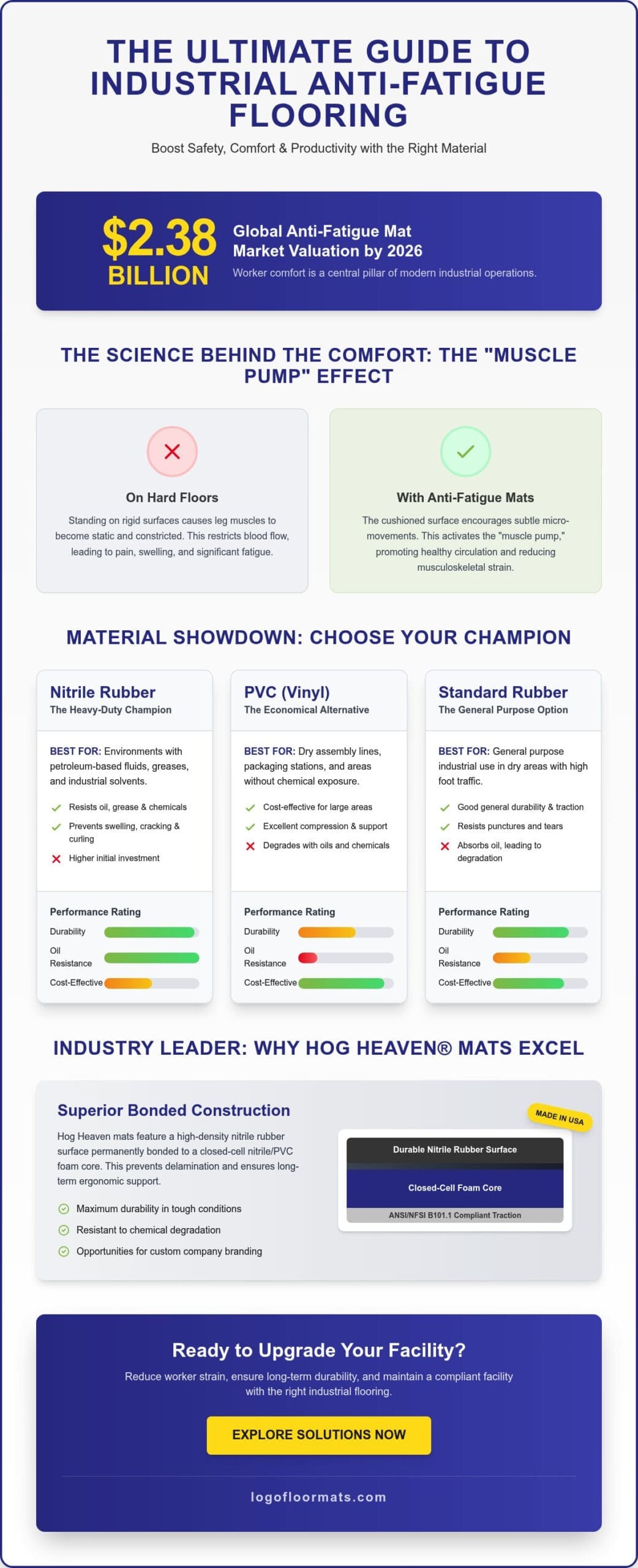
By 2026, the global market for anti-fatigue mats has reached a valuation of $2.38 billion, proving that worker comfort is now a central pillar of industrial operations. You’ve likely seen how chronic fatigue leads to increased injury rates and a noticeable drop in daily output. It’s equally frustrating when the industrial anti fatigue flooring you’ve invested in begins to slide or break down in oily environments, making it difficult to measure any real return on your safety budget. You need solutions that work as hard as your team does without requiring constant replacement.
We believe that safety equipment should be a strategic asset for your business. This guide will show you how to select the right materials to reduce worker strain while ensuring long-term durability in heavy-duty settings. We’ll cover the ergonomic benefits of high-density nitrile rubber, such as that used in Hog Heaven mats, and review the current ANSI/NFSI B101.1-2022 standards to help you maintain a compliant facility. You’ll learn how to identify flooring that resists chemical degradation and provides the traction necessary to meet OSHA general duty requirements effectively.
Standing on a hard concrete floor for an eight-hour shift is more than just uncomfortable; it’s a physiological strain that actively degrades worker performance. High-quality industrial anti fatigue flooring isn’t just a soft layer of padding. It’s a dynamic surface engineered to promote constant, subtle movement in the legs and feet. When a surface is too rigid, muscles become static and constricted, which restricts blood flow. Properly designed anti-fatigue mats provide a calculated level of compression that forces the body to make micro-adjustments to maintain balance.
This process triggers what ergonomics experts call the “Muscle Pump” effect. As the leg muscles contract and relax to stabilize the body on the mat’s surface, they help pump blood back up through the veins toward the heart. This prevents venous pooling, a condition where blood stays in the lower extremities, causing swelling and deep aches. By maintaining healthy circulation, these mats reduce the onset of musculoskeletal disorders (MSDs) and chronic lower back pain. Workers who remain physically fresh are less likely to experience the late-shift concentration lapses that lead to accidents and errors.
Investing in industrial anti fatigue flooring is a financial decision based on long-term cost mitigation. Worker absenteeism due to back strain or joint fatigue carries a high price tag in lost production hours and overtime pay for coverage. Beyond immediate staffing gaps, poor ergonomics contribute to higher workers’ compensation claims and can eventually drive up insurance premiums. Replacing a standard mat is a one-time capital expense that pays for itself by keeping your most experienced operators on the line. The productivity-to-comfort ratio in manufacturing is a direct correlation where reduced physical stress leads to sustained operational output.
Many facilities fall into the trap of mat rental services, but these products rarely meet the demands of a heavy manufacturing environment. Rental mats are typically thin and designed for light foot traffic in retail foyers, not the dense, high-traction requirements of an assembly line. They lack the material density needed to provide a true ergonomic benefit over several years.
Rental contracts also come with hidden costs, including recurring cleaning fees and replacement cycles for mats that degrade quickly. Because rental mats are often made of lightweight materials, they tend to ripple or slide, creating the very trip hazards you’re trying to avoid. Choosing to own your equipment allows you to select high-performance materials like nitrile rubber that offer superior durability. You can learn more about the financial benefits of ownership in our guide on Why Buy Floor Mats Instead of Renting.
The durability of your industrial anti fatigue flooring depends entirely on the chemical composition of the material. Selecting a mat based on price alone often leads to premature failure when the material reacts poorly to the facility environment. Nitrile rubber is the industry benchmark for facilities dealing with petroleum-based fluids, greases, and industrial solvents. Unlike natural rubber or standard PVC, nitrile does not absorb these substances. This resistance prevents the mat from swelling, softening, or cracking over time, which are common issues in automotive and machining plants.
For dry assembly lines where oil exposure is not a concern, PVC (vinyl) provides a cost-effective alternative. It offers excellent compression and support for workers standing in static positions. However, facility managers must distinguish between closed-cell and open-cell foam structures. Closed-cell foam is superior because it won’t wick up spilled liquids or moisture, ensuring the internal cushion remains sanitary and functional. According to the CCOHS guide to anti-fatigue mats, choosing a mat that is too soft can actually increase fatigue. Finding the right balance of “give” and stability is essential for effective ergonomic support.
One often overlooked detail is the thickness of the top “skin.” A thicker, solid-surface skin protects the foam core from delamination, which is the process where the top layer peels away from the cushion. This is a common point of failure in lower-quality mats. High-performance options like Hog Heaven utilize a heat-bonded construction to ensure the surface and cushion remain a single, inseparable unit even under heavy foot traffic. If you are unsure which material fits your specific floor conditions, you can browse our industrial mat selection to compare technical specifications.
Nitrile excels in environments with high chemical exposure because it remains stable across a wide temperature range and resists UV degradation. Natural rubber is highly durable and slip-resistant but will degrade quickly if it comes into contact with oils. When evaluating durability, look at the Shore Durometer scale. A rating between 50 and 70 typically provides the best balance between standing comfort and the structural integrity needed to support heavy work boots without bottoming out.
In electronics manufacturing and cleanrooms, standard mats are not sufficient. Electrostatic Dissipative (ESD) flooring is required to protect sensitive components from catastrophic static discharge. These mats contain conductive materials that safely bleed off static electricity to the ground. Testing these surfaces regularly is a safety requirement to ensure they maintain their dissipative properties and continue to protect both the equipment and the personnel in the workstation.
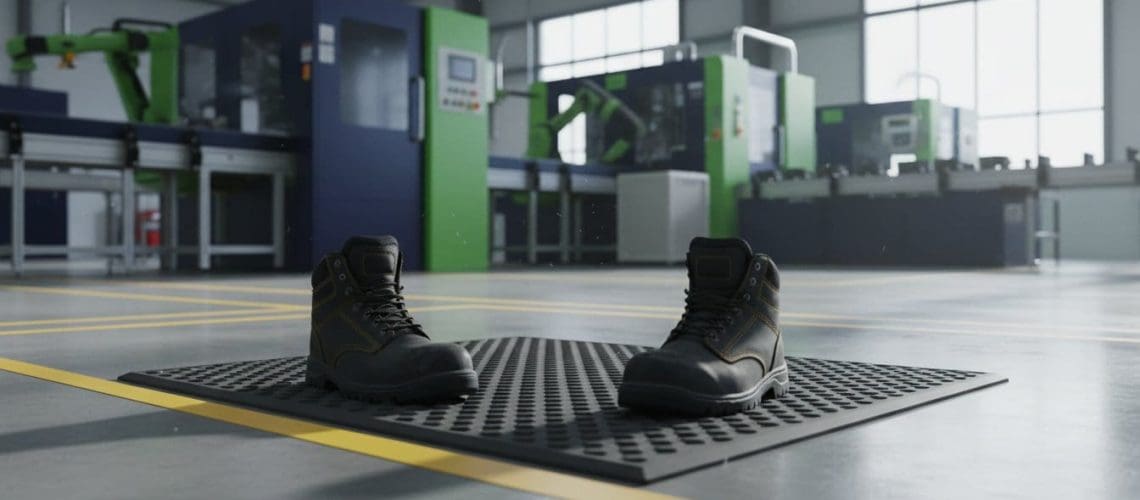
Selecting the right industrial anti fatigue flooring requires a thorough audit of your specific workspace hazards. A mat that works perfectly in a dry assembly line will likely fail, or even become dangerous, in a welding bay or a high-moisture food processing plant. For heavy manufacturing areas where workers move alongside heavy carts, the surface must provide enough traction to prevent slips without creating resistance for wheeled equipment. A NIOSH study on anti-fatigue mats confirms that while mats reduce physical discomfort, they must be properly matched to the environment to avoid introducing new safety risks like tripping or instability.
In environments involving welding or grinding, fire resistance is non-negotiable. Standard PVC mats can melt or ignite when exposed to hot sparks. Solutions like Hog Heaven Anti-Fatigue Mats are specifically engineered with a nitrile rubber surface that resists sparks and hot metal shards, protecting both the floor and the worker. Similarly, food processing facilities and laboratories require flooring with antimicrobial properties to prevent bacterial growth. These areas often need drainage mats with holes to allow liquids to pass through, keeping the standing surface dry and safe for personnel.
Even in pharmacy and retail settings, the need for ergonomic support remains high. While these environments may prioritize aesthetics to match branding, the internal cushion must still provide the necessary micro-movements to prevent leg fatigue. It’s about finding a balance between a professional appearance and the high-performance utility required for people standing for eight to ten hours a day.
Safety managers should prioritize the Coefficient of Friction (COF) when evaluating industrial anti fatigue flooring. A higher COF indicates better slip resistance, which is vital in oily or wet conditions. Diamond-plate textures are excellent for multi-directional movement in dry areas, while pebbled or aggressive textures often perform better in wet conditions. Every mat should feature beveled edges on all sides to prevent trip hazards, especially in high-traffic zones where workers move quickly between stations.
For sprawling assembly lines, long runners provide a seamless path of protection that covers the entire length of the workstation. However, modular interlocking tiles are more effective for custom-shaped areas or workstations with permanent machinery. While loose-lay mats are easier to move for cleaning, permanent adhesives or heavy-duty backing might be necessary in areas where heavy carts are frequently turned. Interlocking systems allow you to replace a single damaged section rather than an entire runner, which can lower long-term maintenance costs.
Implementing industrial anti fatigue flooring effectively requires a methodical strategy that begins well before the product arrives at your facility. A successful rollout starts with a comprehensive site audit to identify specific traffic patterns and the types of hazardous spills common to each workstation. You must ensure that the flooring doesn’t interfere with the movement of heavy carts or forklifts, as discussed in previous sections regarding material density. Transition zones between different floor types are often where accidents occur, so planning these areas is a priority.
Once you’ve identified the environment, precise measurement is the next step. Every mat must provide enough surface area for a worker to move naturally within their station without stepping off the edge. Measurement is critical. If a mat is too small, workers will frequently step off the edge, which increases the risk of ankle strain and defeats the ergonomic purpose. When measuring, keep ADA-compliant clearance in mind to ensure the floor remains accessible for all employees. Choosing the right thickness is equally important; a 5/8 inch mat is typically sufficient for standard eight hour shifts, while a 7/8 inch option provides the extra support needed for extended 10 or 12 hour operations.
Long term performance depends on a consistent maintenance schedule. Grit and metal shavings can act as abrasives that wear down the surface skin of the mat prematurely. You should also monitor your flooring for signs of “bottoming out,” which occurs when the foam core loses its resiliency and no longer provides the necessary micro-movements for leg circulation. When the mat no longer springs back after a footstep, it has reached the end of its functional life. Establishing a clear replacement cycle based on these observations ensures your safety ROI remains high.
Accessibility is a critical component of workplace safety. To avoid violating accessibility laws, ensure that all mat transitions are gradual and secure. High-visibility yellow safety borders are highly recommended for industrial settings to alert workers to changes in floor elevation or the boundaries of a workstation. OSHA-compliant beveled edges are essential because they allow wheels to transition smoothly and prevent the mat from becoming a trip hazard. These edges should be integrated into the mat design rather than added as an afterthought to ensure they don’t curl over time.
Improper cleaning is one of the most common causes of mat failure. While it may be tempting to use a power washer for speed, the high pressure can force water into the foam core of certain mats, leading to internal rot and delamination. Use only approved cleaning agents that are compatible with nitrile or PVC surfaces to avoid chemical breakdown. Harsh solvents can strip the protective oils from nitrile, making it brittle. You can find detailed instructions on maintaining your investment in our guide on How to Clean Industrial Anti-Fatigue Mats.
If you are ready to upgrade your facility’s safety standards, you can order your industrial anti-fatigue mats here to ensure your team has the best ergonomic support available.
The effectiveness of your industrial anti fatigue flooring strategy depends on the reliability of the products you choose. While we have discussed the science of ergonomics and the importance of material selection, the Hog Heaven line stands as a premier example of these principles in action. This product line provides a distinct advantage by using a nitrile rubber surface that is permanently heat-bonded to a high-density nitrile/PVC-blended cushion. This construction prevents the delamination issues common in lower-quality mats where the top layer peels away from the foam core. A May 2026 review of the best industrial solutions identified the Hog Heaven Ergonomic Anti-Fatigue Mat as the top choice for demanding environments.
These mats are designed to withstand the rigors of 24/7 multi-shift operations without losing their resiliency. Whether your team is working in a dry assembly area or a machine shop with heavy oil exposure, the nitrile rubber surface remains stable and slip-resistant. The versatility of the brand extends from the shop floor to the front office. For example, Hog Heaven Fashion mats provide the same industrial-grade ergonomic support but feature a decorative fabric surface suitable for reception desks or pharmacy counters. This allows you to maintain a consistent safety standard across every department of your facility.
One significant advantage of working with Logo Floor Mats is the ability to customize high-performance mats with your company identity. Using logo mats on the shop floor does more than just promote your brand; it reinforces safety protocols and establishes a professional atmosphere for employees and visitors alike. We utilize a precision inlay method rather than surface printing. In this process, the logo is cut directly from the mat material and bonded into the surface. This ensures the design remains vibrant and intact even under heavy foot traffic and frequent cleaning. You can explore these customizable options by viewing our Anti-Fatigue Logo Mats.
We aim to reduce the friction of the purchasing process by acting as a knowledgeable guide for your business. We offer no-minimum order requirements, which is a practical benefit for small industrial shops that only need a few high-quality stations. Our team provides expert consultation to help you navigate custom sizing and material selection based on your specific site audit. We view our products as strategic assets for your maintenance and safety goals rather than just floor coverings. If you are ready to improve your facility’s productivity and safety, you can Get a Quote for Your Industrial Flooring Today.
Ensuring your team remains productive throughout 2026 requires more than just standard floor coverings. By choosing high-performance industrial anti fatigue flooring, you address the physiological needs of your workforce while protecting your facility from common industrial hazards. You now understand that the right material, such as nitrile rubber for oily environments, is essential for preventing material degradation and ensuring long-term durability. Combining these ergonomic benefits with custom branding and ADA-compliant safety features creates a professional, high-functioning workstation that supports your operators shift after shift.
We bring over 25 years of industrial matting expertise to every project. Our team provides manufacturer-direct quality and offers custom sizing for any unique workstation layout. We’re ready to help you reduce worker strain and eliminate the hidden costs of poor ergonomics with reliable, results-oriented solutions. It’s a strategic investment that pays dividends in both employee safety and daily operational output.
Browse our Hog Heaven Industrial Anti-Fatigue Collection today to find the perfect fit for your specific environment. We look forward to helping you build a safer and more efficient workspace.
Nitrile rubber is the most effective material for demanding industrial environments because it resists oils, greases, and chemicals. Unlike natural rubber or standard PVC, nitrile won’t swell or degrade when exposed to petroleum-based fluids. This makes it the industry standard for machine shops and automotive assembly lines. For dry areas, high-density PVC foam is a cost-effective alternative that provides excellent cushion for workers in static standing positions.
High-quality industrial mats typically last between three and five years under standard multi-shift conditions. The actual lifespan depends on foot traffic volume, the presence of abrasive debris like metal shavings, and the frequency of cleaning. Mats in high-traffic corridors or those exposed to harsh solvents may require replacement sooner to maintain their ergonomic properties and prevent the internal cushion from losing its resiliency.
Standard anti-fatigue mats are not designed to withstand the weight and torque of forklifts, as the material will likely tear or compress permanently. However, heavy-duty mats with a high-density core can accommodate manual pushcarts if they feature OSHA-compliant beveled edges. For areas with frequent cart movement, it’s best to use low-profile mats or permanent flooring solutions that won’t shift or ripple under the wheels.
Yes, industrial anti fatigue flooring directly impacts productivity by mitigating the physical strain that causes late-shift performance drops. When workers aren’t distracted by lower back pain or leg aches, they maintain a more consistent pace and make fewer assembly errors. This helps facilities maintain high output levels while reducing the likelihood of accidents caused by physical exhaustion during long standing shifts.
Yes, specialized nitrile rubber mats are engineered to resist sparks and hot metal shards in welding bays. Products like Hog Heaven feature a spark-resistant surface that won’t melt or ignite when exposed to welding slag. It’s critical to verify the fire rating of your flooring before installation in grinding or welding stations to ensure it meets your facility’s specific safety and fire prevention standards.
You should replace your mats as soon as they lose their resiliency or show signs of structural damage. A common test is to check for “bottoming out” by stepping on the mat; if you feel the hard floor beneath the cushion, the ergonomic benefit is gone. Other warning signs include visible cracking, curling edges that create trip hazards, or delamination where the top surface separates from the base.
Modular tiles are ideal for complex workstation layouts or custom-shaped areas, as they allow you to replace individual damaged sections rather than an entire floor. Long rolls or runners are more efficient for linear assembly lines, providing a seamless surface that covers the entire length of the workstation. Choosing between them depends on whether your industrial anti fatigue flooring needs to cover a specific path or a large, irregular area.