A wet lobby at 8:00 a.m. can turn into a safety issue before the front desk has finished its first round of check-ins. In medical offices, clinics, hospitals, and outpatient centers, healthcare entrance floor mats do more than catch dirt. They help reduce slip risk, protect interior flooring, support a cleaner environment, and shape the first impression patients, visitors, and staff get when they walk through the door.
That combination matters because healthcare facilities do not have a simple entryway challenge. They have constant foot traffic, rolling equipment, changing weather, strict cleaning routines, and a public-facing environment where appearance and safety are both under scrutiny. The right mat system helps on all of those fronts. The wrong one wears out too quickly, shifts underfoot, holds too much moisture, or creates more maintenance than it solves.
In most commercial buildings, an entrance mat is expected to trap debris and absorb water. In healthcare, the job is broader. A mat at the front door may need to handle patients with mobility devices, staff moving quickly between departments, delivery traffic, and visitors entering in all weather conditions.
That means performance starts with moisture control, but it does not stop there. The mat also needs enough surface texture to scrape off outdoor debris before it gets tracked inside. It should lay flat, resist curling at the edges, and stay in place under frequent use. If a facility uses wheelchairs, carts, or rolling medical equipment near the entrance, the mat has to support smooth movement without bunching or creating resistance.
Appearance also carries more weight in healthcare than some buyers expect. A faded or waterlogged mat at the front entrance can make a clean facility look less organized than it really is. That is one reason many healthcare buyers look for mats that combine functional performance with a polished, professional look.
One of the most common purchasing mistakes is trying to solve every entrance problem with a single mat. Sometimes that works in a smaller clinic or private practice. In larger facilities, it usually does not.
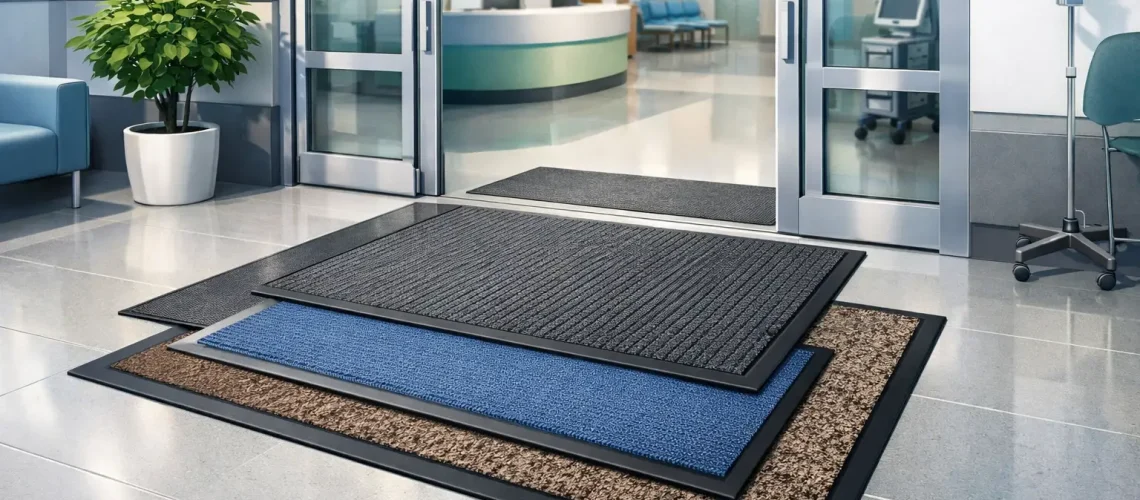
Outdoor scraper mats are designed to knock off heavier debris before it reaches the lobby. Indoor water-absorbing mats handle the moisture that remains on shoes and wheels. Used together, they generally perform better than either one on its own. If your entrance gets a lot of rain, snow, or landscaping debris, a two-stage or three-stage system is often the better investment because it reduces how much dirt and water gets beyond the first few feet.
It depends on the building layout. A small physician office with a covered entry may do well with a high-performance indoor mat just inside the door. A hospital entrance with multiple automatic doors, vestibules, and steady visitor traffic usually benefits from a coordinated mat setup with specific roles for each area.
Material choice affects durability, cleaning, appearance, and cost. There is no single best option for every facility, but there are clear strengths depending on the application.
Water-absorbing carpet-top mats are a strong fit for interior healthcare entrances because they help pull moisture off shoes and hold it until routine cleaning. These are often chosen for lobbies, reception areas, and vestibules where presentation matters. A quality carpet-top mat can also support custom branding or facility identification without looking overly promotional.
Rubber scraper mats are better suited to outdoor use or harsh transitional areas. They stand up well to weather and help remove grit before it travels indoors. For facilities in regions with snow, salt, or frequent rain, these mats can take pressure off the interior system.
There are also heavy-duty combination mats that blend scraping and drying performance. These are practical when space is limited and one mat has to do more than one job. The trade-off is that a combo mat may not match the peak scraping ability of a dedicated outdoor mat or the peak absorbency of a dedicated indoor mat. For many healthcare sites, though, balanced performance is exactly what is needed.
A mat cannot improve safety if it is hard to maintain. That is why cleaning requirements should be part of the buying decision from the start.
Healthcare facilities tend to have frequent cleaning schedules and little tolerance for products that hold odors, show heavy staining, or require special treatment. A good entrance mat should vacuum easily, dry reasonably fast, and continue performing after repeated cleaning. Rubber backing matters here too. It helps the mat stay put, but it also affects how well the mat holds up over time in a high-traffic setting.
Be realistic about maintenance conditions. If your team can only vacuum daily and deep clean periodically, choose a mat designed to keep working under that routine. If a mat looks great on day one but becomes matted down or difficult to clean after a few weeks, the lower upfront price stops looking like a bargain.
For some facilities, yes. For others, a plain professional mat is the better choice. The answer usually comes down to where the mat is going and what the organization wants the entrance to communicate.
In public-facing areas such as medical office lobbies, urgent care centers, specialty clinics, and administrative healthcare buildings, a custom logo mat can reinforce professionalism and brand consistency. It can make the front entrance feel more finished and intentional while still performing the practical job of moisture and dirt control.
In other settings, especially where a more understated look is preferred, a solid-color or patterned commercial mat may be the right fit. Healthcare buyers often want a clean, institutional appearance rather than a bold retail-style statement. The good news is that branded mats do not have to look flashy. With the right color selection and artwork, they can stay subtle and professional.
That balance is one reason facilities teams and marketing teams sometimes both weigh in on the same purchase. One side is focused on performance and lifespan. The other is looking at presentation and consistency. A well-chosen mat can satisfy both.
A mat that is too small may look neat, but it often underperforms. The goal is to give incoming foot traffic enough contact with the mat surface to remove debris and capture moisture before people reach finished flooring.
For a single front door in a small practice, that may mean a straightforward rectangular mat sized to the opening and surrounding traffic path. For larger healthcare facilities, the mat should match the full width of the entrance whenever possible and extend deep enough to create meaningful contact underfoot. Wider coverage also helps with rolling traffic, which does not always follow the same line as foot traffic.
Layout matters as much as raw dimensions. Consider swing doors, automatic entry systems, vestibules, and reception sightlines. A mat should look integrated with the space, not dropped in as an afterthought.
If you are sourcing healthcare entrance floor mats for one location or multiple sites, the buying process should be straightforward. That starts with a supplier that understands commercial applications and can help narrow the options quickly.
Look for clear information on material type, intended placement, backing, thickness, and cleaning expectations. If you are ordering a custom logo mat, proofing support is important because healthcare organizations often need artwork handled accurately and professionally. Fast turnaround also matters when a new facility is opening, a renovation is wrapping up, or a worn-out mat needs replacement without delay.
This is where experience counts. A vendor that works with commercial and institutional buyers every day is usually better equipped to recommend the right product for a healthcare entrance than a general promotional supplier. LogoFloorMats.com focuses specifically on that kind of mat selection, which makes the process easier when you need function, appearance, and speed in the same order.
The best mat for a healthcare entrance is not always the most expensive one or the one with the most features. It is the one that fits your traffic level, weather exposure, maintenance routine, and presentation standards.
If your biggest problem is rain getting tracked into a reception area, prioritize absorbency and coverage. If you are dealing with dirt and grit from an uncovered entry, add outdoor scraping performance. If appearance is part of the job, choose a mat that supports a clean, professional look and holds that look over time.
A healthcare entrance asks a lot from a floor mat. When the mat is selected well, it quietly does its job every day – keeping floors drier, entrances cleaner, and the facility looking ready for the people who count on it.