

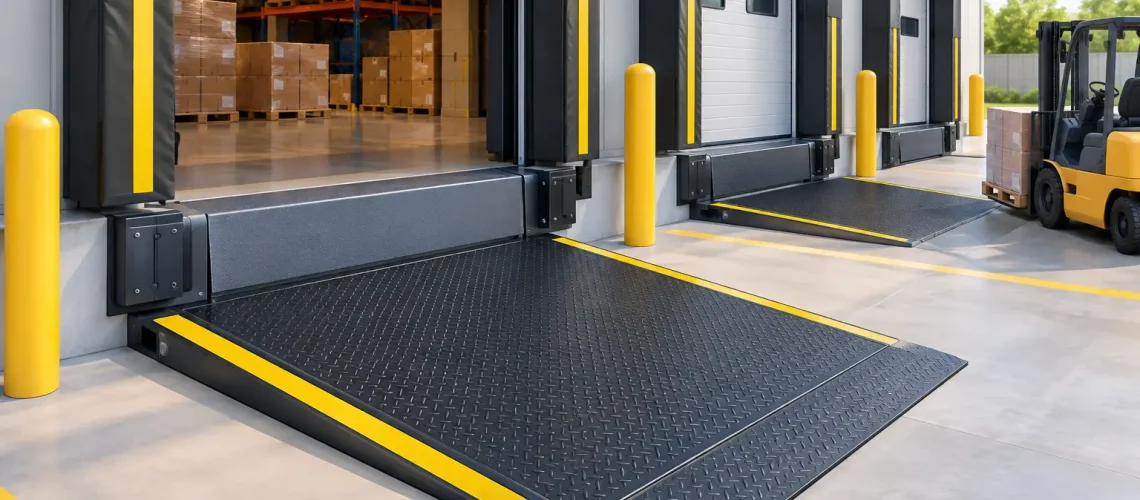
A loading dock is built for movement: pallet jacks, delivery drivers, rolling carts, warehouse staff, and doors that open in every kind of weather. Without the right loading dock mats at the transition from dock to interior space, that activity can quickly become tracked-in water, grit, damaged floors, and avoidable slip concerns.
For facilities teams, the right mat is not a decorative afterthought. It is a practical part of keeping a busy entrance cleaner, safer, and easier to maintain. For customer-facing docks, receiving areas, and service entrances, it can also support a more professional appearance from the moment someone walks through the door.
Loading docks are tougher on matting than a typical office lobby. Foot traffic may be heavy, but it is often only part of the equation. Employees may be carrying packages, pushing equipment, entering with wet work boots, or moving between outdoor pavement and finished interior flooring all day.
A good loading dock mat should trap moisture and debris before it spreads across the building. It should stay in place under regular traffic, tolerate frequent cleaning, and have a surface appropriate for the conditions outside the door. Thin residential-style mats tend to flatten, shift, and lose their effectiveness quickly in this setting.
The best choice depends on what the dock faces. A covered loading bay in a dry climate has different needs than an open receiving door exposed to rain, snow, de-icing salt, and parking-lot grit. The floor surface inside matters, too. Smooth concrete, sealed tile, polished floors, and carpeted corridors each call for a mat with suitable backing and performance characteristics.
The most effective facilities use matting as a system rather than relying on one small mat at the door. Start by considering where the dirt and water enter, then choose products for the conditions at each point.
Outdoor scraper mats are designed to remove larger debris from shoes before workers or visitors cross the threshold. Raised patterns, molded surfaces, and aggressive fibers can help dislodge dirt, mud, and gravel that would otherwise end up on interior floors.
An outdoor mat needs weather resistance and enough weight or backing to stay positioned. If the entrance is exposed to substantial rain, look for drainage features that allow water to move through the mat instead of pooling on top. For an uncovered dock, this is usually more useful than a plush surface that stays saturated.
The interior mat does the moisture control work. Waterhog-style mats, commercial carpeted mats, and high-performance entrance mats are common choices because they scrape fine debris while absorbing water from footwear.
This is often the most important mat location. A mat placed immediately inside the door gives employees a chance to take several steps before reaching smooth floor surfaces, reducing the amount of moisture carried farther into the building. For most commercial entries, more mat coverage is better than a small mat that ends after one stride.
If a receiving area leads directly into offices, retail space, corridors, or public areas, a second mat can protect the cleaner side of the building. This is especially useful when staff use the same path repeatedly during deliveries or shift changes.
A lighter-duty indoor mat may be suitable here because the first mat has already captured much of the dirt and moisture. If the transition is visible to customers or tenants, it can also be a good place for a custom logo mat that reinforces your brand while continuing to protect the floor.
There is no single best material for every loading dock. The right product is based on exposure, traffic, cleaning requirements, and whether the mat needs to display a logo or message.
Rubber scraper mats are a strong option for outdoor or semi-covered areas. They are durable, easy to hose off, and effective against larger debris. Their trade-off is that they generally do not absorb much moisture, so they work best before an absorbent mat rather than as the only protection at an entrance.
Commercial carpeted mats are well suited for indoor dock entrances, hallways, and receiving areas. Their fibers hold water and fine particles, helping floors stay cleaner between maintenance cycles. Look for a commercial-grade backing that supports the mat, helps it lie flat, and provides appropriate slip resistance for the floor beneath it.
Vinyl loop mats are practical in wet, messy environments where drainage and easy cleaning are priorities. Open-loop construction lets debris fall below the walking surface and can be a good fit for utility entrances, service counters, or transitions where mud and water are common.
Custom logo mats can be used inside a loading dock office, receiving desk area, employee entrance, or customer-facing service entrance. They are not a replacement for aggressive outdoor scraping when conditions are rough. They are a smart addition where facility protection and brand presentation need to work together.
A mat can only capture dirt and water while people are walking on it. That is why undersized mats are a common facility mistake. If a person takes one step across a mat and two wet steps onto bare flooring, the mat is doing only part of its job.
For a standard personnel door, choose a width that covers the natural walking path and a length that allows several steps. For double doors, wider entrances, and high-volume receiving areas, a larger mat or multiple mats placed edge to edge may be necessary. Keep edges flat and avoid gaps that can create trip concerns or allow debris to bypass the mat.
Also consider carts and wheeled equipment. Some thick, heavily textured mats can make rolling loads less convenient. In areas where pallet jacks, dollies, or carts regularly cross the entrance, select a lower-profile commercial mat or position heavy scraper matting where it will not interfere with traffic flow. Safety and floor protection should not create a new operational obstacle.
Even a high-quality mat loses performance when it is overloaded with dirt and water. A regular cleaning plan extends mat life and helps maintain the appearance of the entrance.
Vacuum or sweep indoor mats as needed to remove dry debris. In wet seasons or busy delivery periods, extract or wash mats more frequently so they can continue absorbing moisture. Outdoor rubber and vinyl loop products can often be shaken out, hosed down, or pressure washed according to manufacturer guidance.
Inspect mats regularly for curled corners, worn backing, loose edges, and areas that no longer lie flat. A mat that has reached the end of its usable life can create a trip risk and may not provide the traction or moisture control your facility needs. Replacing it on time is generally less costly than dealing with floor damage or a preventable slip incident.
A loading dock does not have to look like an afterthought. If drivers, vendors, employees, or customers enter through the area, branded matting can help create a more organized, professional impression.
LogoFloorMats.com offers custom commercial mat options for businesses and organizations that want to combine floor protection with a clear brand presence. A logo, department name, safety message, or welcome statement can be incorporated into the right indoor mat style, with a free proof available before production.
The key is choosing the correct role for each mat. Use high-performance scraper and water-trapping matting where the weather and debris demand it. Use logo mats where visibility, presentation, and indoor protection matter most. That combination gives the entrance a purpose beyond simply covering the floor.
Before selecting loading dock mats, confirm whether the space is indoors, outdoors, or partially covered; how much weather reaches the doorway; and whether carts or pallet jacks will cross the mat. Measure the full walking path rather than only the door opening. Finally, consider how often your team can clean the mat and whether branding is useful in that location.
A well-chosen matting plan does quiet work every day. It catches the mess that arrives with deliveries, helps protect expensive flooring, and keeps a demanding part of the building looking ready for business.